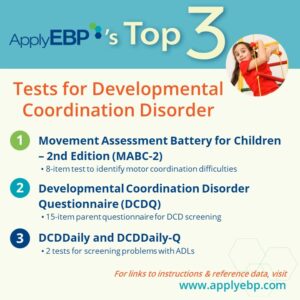

Q. Help! My client has been diagnosed with ADHD in addition to his main diagnosis. What should I do?
Are you missing a key piece of the puzzle in your client’s care? Complex ADHD could be the hidden factor behind why some children with existing diagnoses—like autism, developmental coordination disorder, or language disorders—struggle even more than expected, especially with executive function skills. Complex ADHD refers to the presence of ADHD plus one or more co-occurring conditions, creating a unique and often challenging clinical picture.
As school-based and/or pediatric OT, PT, and SLP providers, recognizing Complex ADHD isn’t optional—it’s essential. It can mean the difference between generic support and truly effective, individualized intervention. Here are three critical things you need to know about Complex ADHD:
1. You Might Be Working with a Client with Complex ADHD
Complex ADHD is more common than you think.
Rarely an “only” diagnosis, research shows that at least 60% to up to 80% of children with ADHD have at least one other co-occurring condition (Barbaresi, et al, 2020; Reale et al, 2017), such as:
-
-
- Anxiety or mood disorders
- Autism
- Developmental Coordination Disorder (DCD)
- Specific Learning Disabilities (e.g., dyslexia, dysgraphia)
- Speech and Language Disorders
- Chronic medical conditions (e.g., history of extreme prematurity, epilepsy, traumatic brain injury, motor disabilities, fetal alcohol spectrum disorders)
- Genetic disorders (e.g., Down syndrome, Fragile X syndrome)
-
This means that beyond the original reason for referral, the children and youth you’re working with may also exhibit challenges commonly associated with ADHD, including deficits in key executive function domains such as:
-
-
- Impulse control
- Self-monitoring
- Cognitive flexibility
- Behavioral flexibility
- Emotional regulation
- Attention regulation
- Organization
- Time management
- Working memory
- Planning
- Task initiation
- Task completion
-
In some cases, complex ADHD may also be amplifying symptoms beyond what’s typically expected in their co-occurring condition (e.g., increased impulsivity of an autistic youth, or poor working memory in children with specific learning disabilities).
2. Complex ADHD Impacts the Efficacy of Your Interventions
When working with children and youth with Complex ADHD, you may find that your interventions are falling short.
This may be because the presence of complex ADHD is masking their other needs. For example:
-
-
-
- A youth with motor coordination difficulties may also struggle with attention and sequencing, but only the physical issues are flagged.
- A child receiving speech services for language formulation might have undiagnosed ADHD that affects narrative structure, working memory, or pragmatic use.
- A child who appears anxious or oppositional in therapy may be experiencing behavioral inflexibility or emotional dysregulation rooted in ADHD.
-
-
Knowing that a child has complex ADHD tells us that we may need to incorporate additional evidence-based strategies – targeting ADHD symptoms – into our current approaches. Doing so can boost our effectiveness in impacting the child or youth’s performance of skills and participation in school, at home, and in the community.
For example, we can support our client’s executive function skills by teaching them to monitor and manage their own actions and reactions, integrating more frequent breaks for longer tasks, or supporting their working memory with organizers and visual supports.
3. In Complex ADHD, We Prioritize Function Over Compliance
When ADHD is unrecognized, a child might be seen as “noncompliant” or “lazy.” But when ADHD is identified, we’re more likely to respond with understanding and creativity—exploring individualized strategies rather than relying solely on correction or conformity to rules.
With this insight, we can advocate for tools, strategies, and accommodations that support real-life function across school, home, and community settings—helping children engage, self-regulate, and participate more fully. Below are some examples, with the executive function domains supported by each strategy noted in parentheses:
-
-
-
- If Jamie struggles to complete classwork and frequently argues with her teacher about writing essays, could her behavior stem from Complex ADHD? From this perspective, her educator and OT or speech provider might support her executive function (EF) skills by:
- Using a graphic organizer with clear text structure elements (planning and working memory)
- Allowing short breaks to maintain focus, productivitt, and motivation (attention regulation)
- Providing a checklist to self-review punctuation, capitalization, and spacing (self-monitoring)
- If Johnny is seen as unsafe during gym class, could his behavior reflect not just motor difficulties, but EF challenges associated with Complex ADHD? With this lens, the PE teacher and PT might:
- Post clear game rules for Johnny to refer to as needed (working memory)
- Introduce a “safety word” classmates can use when Johnny gets too rough (impulse control)
- Teach Johnny to count to three while lowering the dumbbells to help him control his movements and prevent dropping them (self-monitoring)
- If Jamie struggles to complete classwork and frequently argues with her teacher about writing essays, could her behavior stem from Complex ADHD? From this perspective, her educator and OT or speech provider might support her executive function (EF) skills by:
-
-
Conclusion: Awareness is a Great Therapeutic Tool
ADHD affects how children and youth think, move, speak, and connect. Knowing that your client has Complex ADHD—even when it’s not the “initial” concern—is a powerful way to make our services more responsive, inclusive, and effective, by:
-
-
-
- Avoiding pathologizing behaviors and labeling the child “noncompliant” or “lazy”
- Structuring activities and instructions to be ADHD-friendly
- Collaborating with educators and families to implement accommodations that promote function and participation
-
-
If you would like to learn more about ADHD and executive function skills join Dr. Adiaha Spinks-Franklin’s live courses and on-demand webinars, packed with evidence-informed strategies and resources:
If you would like to learn more about other school-based topics, check out…


References:
-
-
- Barbaresi, W. J., Campbell, L., Diekroger, E. A., Froehlich, T. E., Liu, Y. H., O’Malley, E., … Chan, E. (2020). The society for developmental and behavioral pediatrics clinical practice guideline for the assessment and treatment of children and adolescents with complex attention-deficit/hyperactivity disorder: Process of care algorithms. Journal of Developmental and Behavioral Pediatrics: JDBP, 41 Suppl 2S(2S), S58–S74. doi:10.1097/DBP.0000000000000781
- Reale, L., Bartoli, B., Cartabia, M., Zanetti, M., Costantino, M. A., Canevini, M. P., … & Bonati, M. (2017). Comorbidity prevalence and treatment outcome in children and adolescents with ADHD. European child & adolescent psychiatry, 26, 1443-1457.
Berninger, V. W., Nielsen, K. H., Abbott, R. D., Wijsman, E., & Raskind, W. (2008). Writing problems in developmental dyslexia: Under-recognized and under-treated. Journal of School Psychology, 46, 1–21.
-